Why Steel Buildings Are the Future of Logistics Infrastructure: A Deep Dive
The Logistics Boom in the UK: Challenges and Opportunities
The UK logistics industry is experiencing unprecedented growth. According to a report from Savills, logistics space take-up hit a remarkable 16.82 million sq ft in the first half of 2024, a 44% increase over the same period in 2023. As the demand for faster delivery times, greater storage capacities, and efficient distribution networks intensifies, businesses are scrambling to secure additional warehouse space.
However, the traditional approach to constructing warehouses and distribution centres is increasingly out of touch with the fast-paced needs of the logistics sector. As the demand for space grows, there is a critical need to rethink the logistics infrastructure and adopt more modern, scalable, and sustainable solutions. Enter steel buildings—an ideal choice for meeting the logistical demands of the future.
Steel: The Building Material of Choice for Modern Logistics
Steel has long been the preferred material for industrial construction, but its role in logistics is now more crucial than ever. The growth of e-commerce, the rise of next-day delivery expectations, and the need for agile distribution hubs require infrastructure that can adapt quickly and efficiently. Steel buildings provide a range of advantages that make them uniquely suited to this fast-moving industry.
Fast Construction: The Efficiency Advantage
Time is a precious commodity in the logistics world. With supply chains constantly in motion, businesses need to be able to expand or modify their facilities quickly to meet shifting demands. Steel buildings offer an enormous advantage in terms of speed.
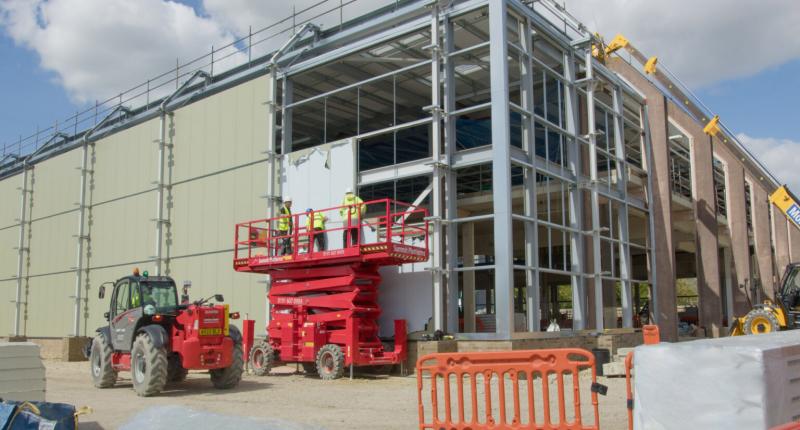
Traditional construction methods can take months or even years to complete, causing delays that can cost businesses significantly. Steel buildings, in contrast, can be fabricated and assembled much faster. Modular construction techniques and pre-engineered components mean that steel buildings can be up and running in a fraction of the time compared to conventional warehouse construction. According to industry experts, steel buildings can be up to 50% faster to construct than traditional methods.
The speed of construction is crucial for logistics companies looking to avoid operational delays. Rapid expansion means that businesses can quickly add capacity to keep up with the growing demand for storage and distribution space, without having to deal with long delays or disruptions.
Durability: Built to Last
One of the key selling points of steel buildings is their exceptional strength and longevity. Logistics facilities are subject to constant use and wear, and they need to withstand significant stresses from heavy machinery, vehicles, and inventory. Steel buildings are ideally suited to these conditions because of their durability and resilience.
Unlike traditional brick-and-mortar buildings, which can degrade over time, steel is a robust material that can withstand extreme weather, heavy loads, and constant wear. Steel is also fire-resistant and impervious to many of the problems that affect other materials, such as pests, rot, and corrosion.
According to a report by the Steel Construction Institute, steel buildings typically last for decades with minimal maintenance, making them a long-term investment for logistics operators. The durability of steel buildings ensures that businesses don’t have to worry about costly repairs or downtime, which can disrupt logistics operations.
Flexibility for Future Growth
The logistics industry is constantly evolving, and businesses need facilities that can evolve with them. Steel buildings are incredibly flexible, allowing companies to expand, modify, or reconfigure their spaces to meet future needs.
Whether it’s adding additional storage capacity, integrating automation systems, or expanding facilities to accommodate new products, steel buildings offer the adaptability that logistics companies require. Unlike traditional brick-and-mortar structures, which often require extensive renovations, steel buildings can be expanded or modified without significant disruption.
Steel buildings can also incorporate multi-level designs, such as mezzanine floors, which can significantly increase the amount of usable space in a building. This flexibility is crucial for logistics companies that need to scale their operations quickly and efficiently.
Sustainability: Eco-Friendly Steel for the Future
As the UK continues its pursuit of a sustainable future, steel buildings offer a solution that is both environmentally friendly and energy-efficient. Steel is 100% recyclable, making it one of the most sustainable materials available for construction. In fact, steel can be recycled an infinite number of times without losing strength, making it a perfect choice for businesses focused on reducing their carbon footprint.
In addition to their recyclability, steel buildings can be designed with numerous eco-friendly features, including solar panels, LED lighting, and highly efficient insulation. These features help to reduce energy consumption and lower operating costs over time. By investing in steel, logistics companies can play an active role in the UK’s commitment to achieving net-zero emissions by 2050.
The future of logistics infrastructure lies in steel. With the growing need for efficient, sustainable, and scalable logistics spaces, steel buildings offer businesses a solution that addresses all of these needs. Specialist steel construction companies providing tailored solutions for businesses in the logistics sector. Carnegie Group has extensive experience in helping companies to future-proof their logistics operations.

Post Your Ad Here
Comments